NASA selects Florida Tech-Led team, including Santa Fe College, to tackle aviation AI challenges
September 18, 2026
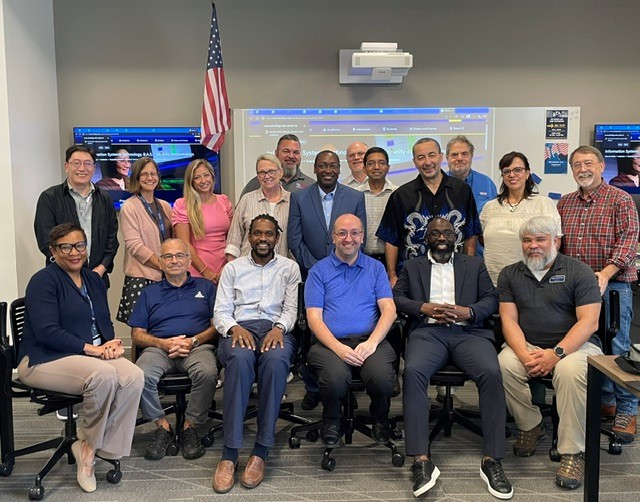
Florida Institute of Technology in Melbourne, Santa Fe College (SF) in Gainesville and the University of Florida (UF) are part of a team of education and industry partners working together as part of NASA’s prestigious University Leadership Initiative (ULI) to help solve 21st century aviation challenges.
Other team members include The Pennsylvania State University in University Park, Pennsylvania, A&T State University in Greensboro, North Carolina, Stanford University in Palo Alto., California, University of Alabama, Tuscaloosa, Ala.; and companies Collins Aerospace in Cedar Rapids, Iowa, and ResilineX of Syracuse, New York
Florida Tech and the research partners are creating a framework for engineers and human operators to determine the trustworthiness of machine-learning-enabled autonomous aviation safety systems. Florida Tech’s TRANSCEND (Trustworthy Resilient Autonomous Agents for Safe City Transportation in the Evolving New Decade) was one of only three projects selected for the latest ULI project grants.
Success will require a workforce with a working-knowledge of artificial intelligence. In aviation, human operators will need a deep understanding of operational aspects of AI and autonomous software in order to trust, and effectively utilize this technology.
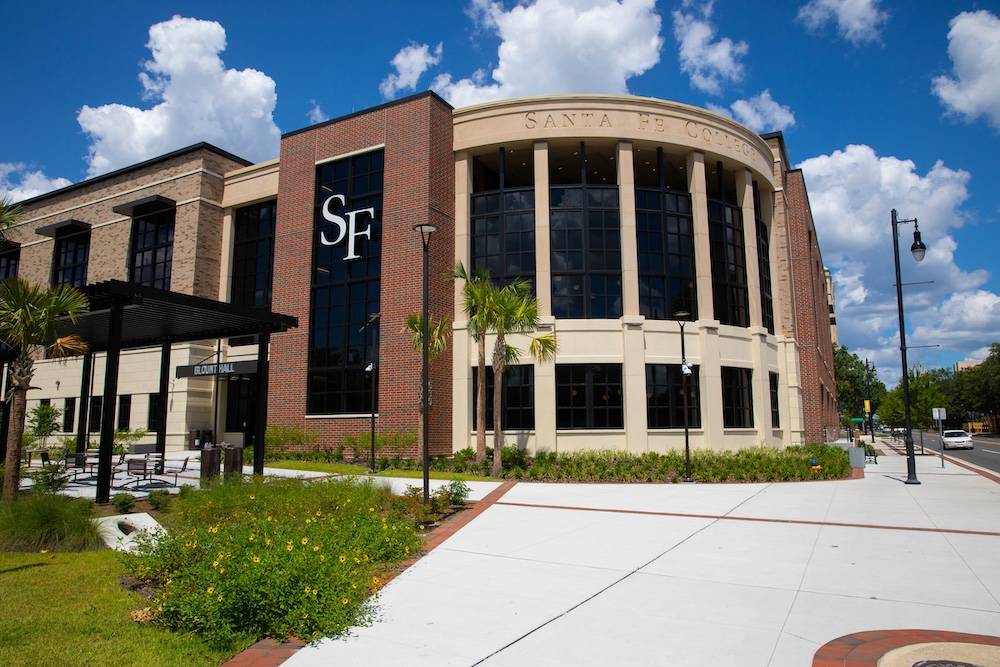
And that’s where Santa Fe College comes in. SF is leading the workforce-education component to deliver AI-focused, hands-on education and training, ultimately designed to help students be prepared to work in related fields.
In this unique program, Santa Fe College are teaching fellow faculty in a train-the-trainer model, using curriculum developed in collaboration with UF and Florida Tech. The goal is to make AI accessible to a wider audience.
“Every major technological advancement has reshaped the workforce,” said Florida Tech associate professor Siddhartha Bhattacharyya and the project’s Principal Investigator. “Our responsibility as professors, teachers, and instructors is to ensure that students are prepared to thrive within that transformation, while also developing the knowledge and judgment to integrate these technologies safely and responsibly.”
SF’s faculty are first to be trained with training to be delivered over time to all 28 Florida College System institutions, over the next three years. The idea is to prepare faculty to incorporate related curriculum into their classes, providing students access to material that they typically would not have access to at a community college.
The curriculum includes AI foundations and associated safety issues and solutions for safety provided in a hand-on experiential training using a series of custom modules.
“While experiential learning is not typical for something as abstract as AI, it will be critical here as we connect AI to notions of safety in practical applications,” said Team member and Santa Fe College associate professor James Nichols, TRANSCEND workforce partner. “It is exciting to consider that we will enable an entire community of colleges to provide our students with a foundation in AI as well as AI safety.”
The significance of this NASA grant-sponsored training extends far beyond SF.
“Through our collaboration with the University of Florida (UF) and Florida Institute of Technology (FIT), we are empowering community college faculty across Florida to bring AI and machine learning concepts into the classrooms in meaningful, hands-on ways to promote good digital citizenship,” Nichols said. “This initiative is especially impactful because it connects emerging technologies with real-world safety and workforce applications, while making advanced AI concepts accessible to educators and students who may not traditionally have exposure to this type of training as most are more familiar with large language models (such as ChatGPT). We are honored to work alongside UF and FIT in training faculty these next three years who will prepare upcoming generations of an AI-ready workforce.”